
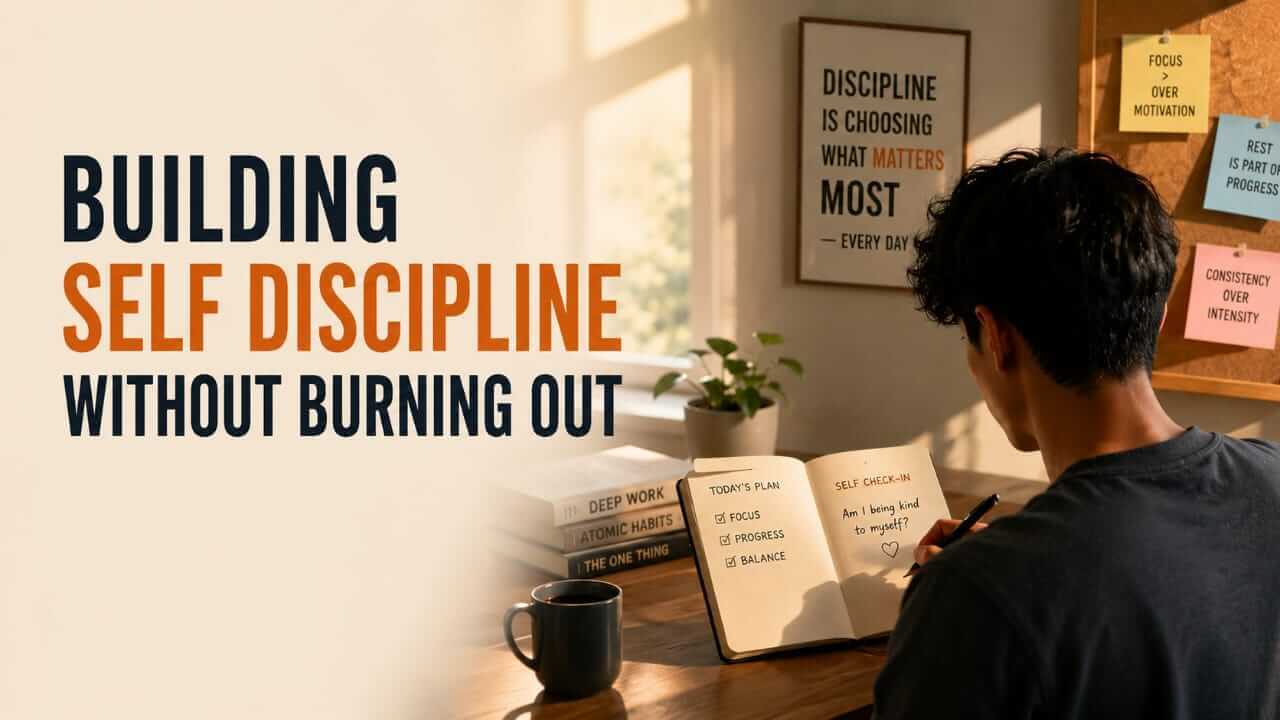
Everyone wants more discipline, but very few people understand what it actually looks like. Many believe discipline means waking up at 5 AM, working until midnight, and never taking a break. That isn’t discipline that’s unsustainable.
Real self-discipline is the ability to do what needs to be done, consistently, even when you don’t feel like it. It’s not about pushing yourself to exhaustion. It’s about building habits that you can repeat for months and years.
As Jim Rohn said, “Discipline is the bridge between goals and accomplishment.” The bridge isn’t built in a day. It’s built one disciplined action at a time.
The Problem with Chasing Extreme Discipline
Most people fail because they try to change everything at once. They create impossible routines, overload their schedules, and expect motivation to carry them forever.
It never does.
Within a few days, they become tired, skip one habit, feel guilty, and eventually quit. The problem wasn’t a lack of willpower. The problem was trying to sprint through a marathon.
Discipline should make your life more effective—not more exhausting. If your routine constantly drains you, it isn’t a productivity system. It’s a countdown to burnout.
1. Stop Depending on Motivation
Motivation is unreliable. Some days you’ll have plenty of it. Most days, you won’t.
That’s why disciplined people don’t wait to “feel ready.” They follow their schedule regardless of their mood.
If you only work when you’re motivated, your results will always be inconsistent. Build routines that make action automatic. Your calendar should decide what you do not your emotions.
Action creates motivation far more often than motivation creates action.
2. Set Standards, Not Huge Goals
Big goals are exciting, but they don’t create daily progress. Standards do.
Instead of saying, “I’ll exercise for two hours,” set the standard of exercising every day, even if it’s only for thirty minutes. Instead of promising to read fifty books this year, commit to reading twenty pages every day.
Discipline grows through repetition, not intensity.
Small actions repeated consistently will always outperform occasional bursts of extreme effort.
3. Protect Your Energy Like It’s Your Greatest Asset
Working longer doesn’t automatically mean you’re working better.
High performers know when to push and when to recover. Sleep enough. Take breaks before your focus disappears. Exercise regularly. Eat food that supports your energy instead of draining it.
Burnout doesn’t happen because you worked hard once. It happens because you ignored recovery for too long.
Your energy is limited. Spend it where it produces the highest return.
4. Make Consistency Non-Negotiable
Missing one day won’t destroy your progress. Missing a week usually will.
Perfection isn’t the goal. Consistency is.
Some days your performance will be excellent. Other days it will simply be enough. Show up anyway.
A short workout is better than no workout. Reading one page is better than reading nothing. Completing an imperfect task is better than waiting for the perfect moment.
Winning isn’t about never failing. It’s about refusing to disappear.
5. Track Progress, Not Perfection
What gets measured gets improved.
Track your habits, your workouts, your study sessions, or your focused work hours. Seeing your progress builds confidence and helps you identify what’s working.
But don’t obsess over flawless streaks. Missing once is a mistake. Quitting is a decision.
Review your progress every week. Adjust your system instead of blaming yourself.
“You do not rise to the level of your goals. You fall to the level of your systems.” Strong systems create disciplined people.
Conclusion
Self-discipline isn’t about being the hardest worker in the room. It’s about becoming the most consistent one.
Stop chasing extreme routines that you can’t maintain. Build habits that survive busy days, stressful weeks, and low motivation. Focus on steady progress instead of dramatic effort.
Remember, discipline isn’t proven by how hard you can push yourself for one week. It’s proven by how consistently you can show up for one year.
Start today. Stay consistent tomorrow. Repeat the process long enough, and the results will take care of themselves.