
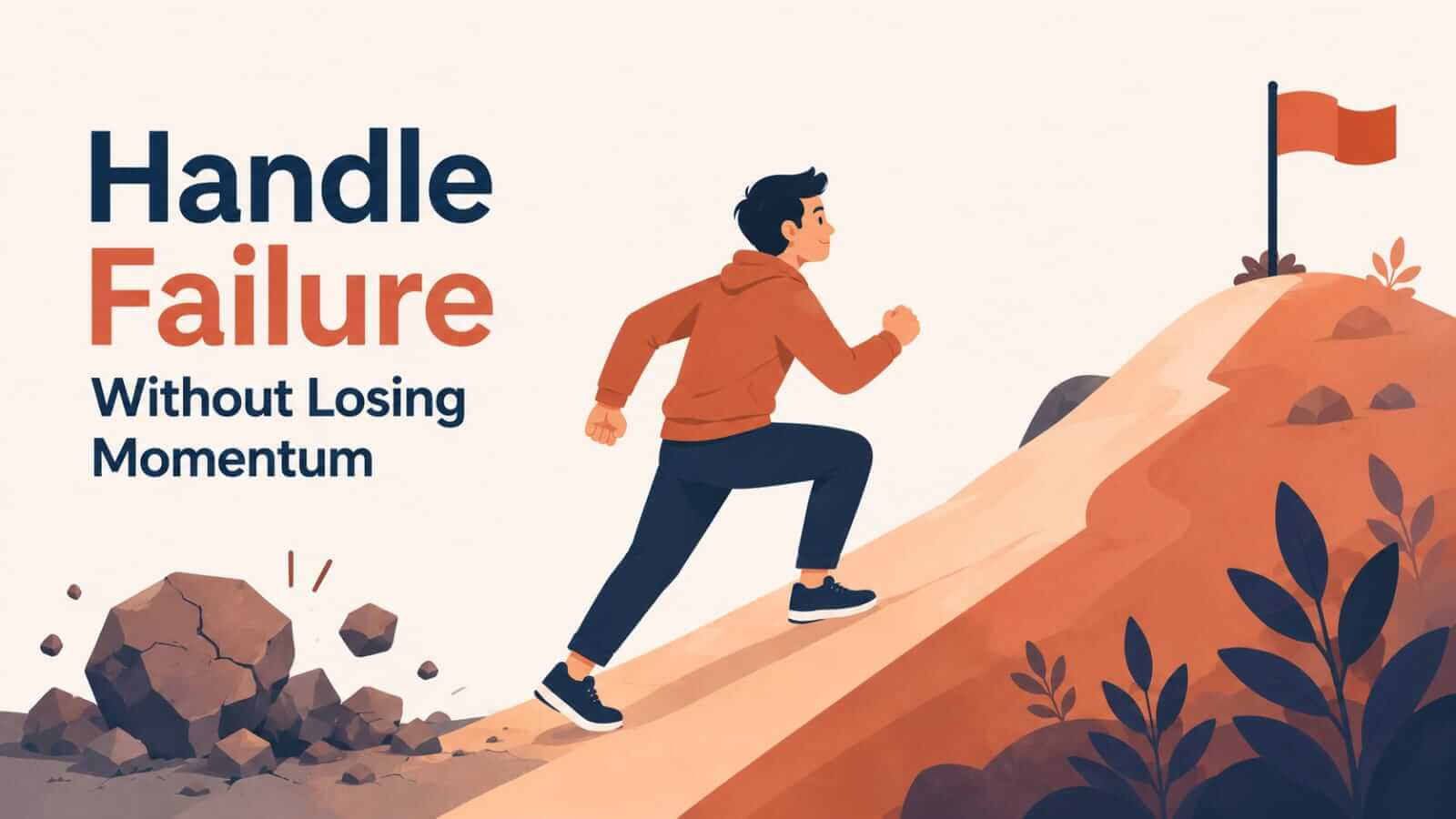
Failure has a way of making us question everything. One mistake can make us doubt our abilities. One rejection can make us wonder if we are on the right path. One setback can feel like all our hard work has gone to waste.
But the truth is, failure is not the opposite of success—it is part of the journey toward it. Every successful person you admire has experienced disappointment, made mistakes, and faced moments when giving up seemed easier than trying again.
“Success is not final, failure is not fatal: it is the courage to continue that counts.” The real challenge is not avoiding failure. The real challenge is learning how to keep moving even when things don’t go as planned.
The Problem with Letting Failure Stop You
When we fail, our mind often focuses on what went wrong instead of what can be learned. We replay our mistakes, compare ourselves to others, and start believing that one setback defines our future.
This mindset creates fear. We stop taking risks, delay important decisions, and lose confidence in our own potential. Over time, it becomes easier to quit than to try again.
But failure is only a single chapter of your story—not the entire book. Every setback carries a lesson, and every lesson makes you stronger if you choose to learn from it.
1. Accept Failure Without Judging Yourself
The first step is accepting that failure is a normal part of growth. Making a mistake does not make you a failure. It simply means you tried something that didn’t work.
Instead of asking, “Why did this happen to me?” ask, “What can this teach me?” This small shift changes your perspective from self-criticism to self-improvement.
Growth begins the moment you stop fighting reality and start learning from it.
2. Focus on the Next Small Step
After a setback, it is easy to feel overwhelmed. You may think about everything that went wrong or worry about the future. Instead, bring your attention back to the present.
You don’t need to have all the answers today. You only need to take the next meaningful step.
A single phone call, one application, one workout, one page, or one conversation may seem small, but small actions create momentum. Progress is built one step at a time.
3. Stop Measuring Yourself Against Others
One of the quickest ways to lose motivation is by comparing your failures to someone else’s success.
Remember that you are only seeing the highlights of other people’s journeys. Behind every achievement are countless struggles, disappointments, and unseen efforts.
Your journey is unique. The only comparison that truly matters is whether you are growing compared to who you were yesterday.
4. Turn Every Failure into Feedback
Every setback contains valuable information. Instead of treating failure as a dead end, treat it as feedback.
Ask yourself:
– What worked?
– What didn’t?
– What can I improve next time?
This simple reflection transforms failure from something painful into something useful. The people who grow the fastest are not the ones who never fail—they are the ones who learn the fastest.
As Thomas Edison famously said, “I have not failed. I’ve just found 10,000 ways that won’t work.”
5. Keep Showing Up
Momentum is not built by being perfect. It is built by being consistent.
Some days you’ll feel motivated. Other days you’ll feel disappointed. What matters is that you continue showing up even when enthusiasm fades.
Every time you choose to try again, you strengthen your resilience. Every small effort reminds you that failure does not have the final say.
The road to success is rarely straight, but every step forward brings you closer to the person you are becoming.
Conclusion
Failure is painful, but it doesn’t have to stop your journey. It can become the moment that teaches you resilience, patience, and courage. Every setback is an opportunity to grow wiser, stronger, and more determined.
So don’t let one bad day convince you to give up on a good dream. Learn the lesson, make the adjustment, and keep moving forward.
Your pace doesn’t matter as much as your persistence. As long as you refuse to stop, failure will never be the end of your story—it will simply be another step toward your success.