
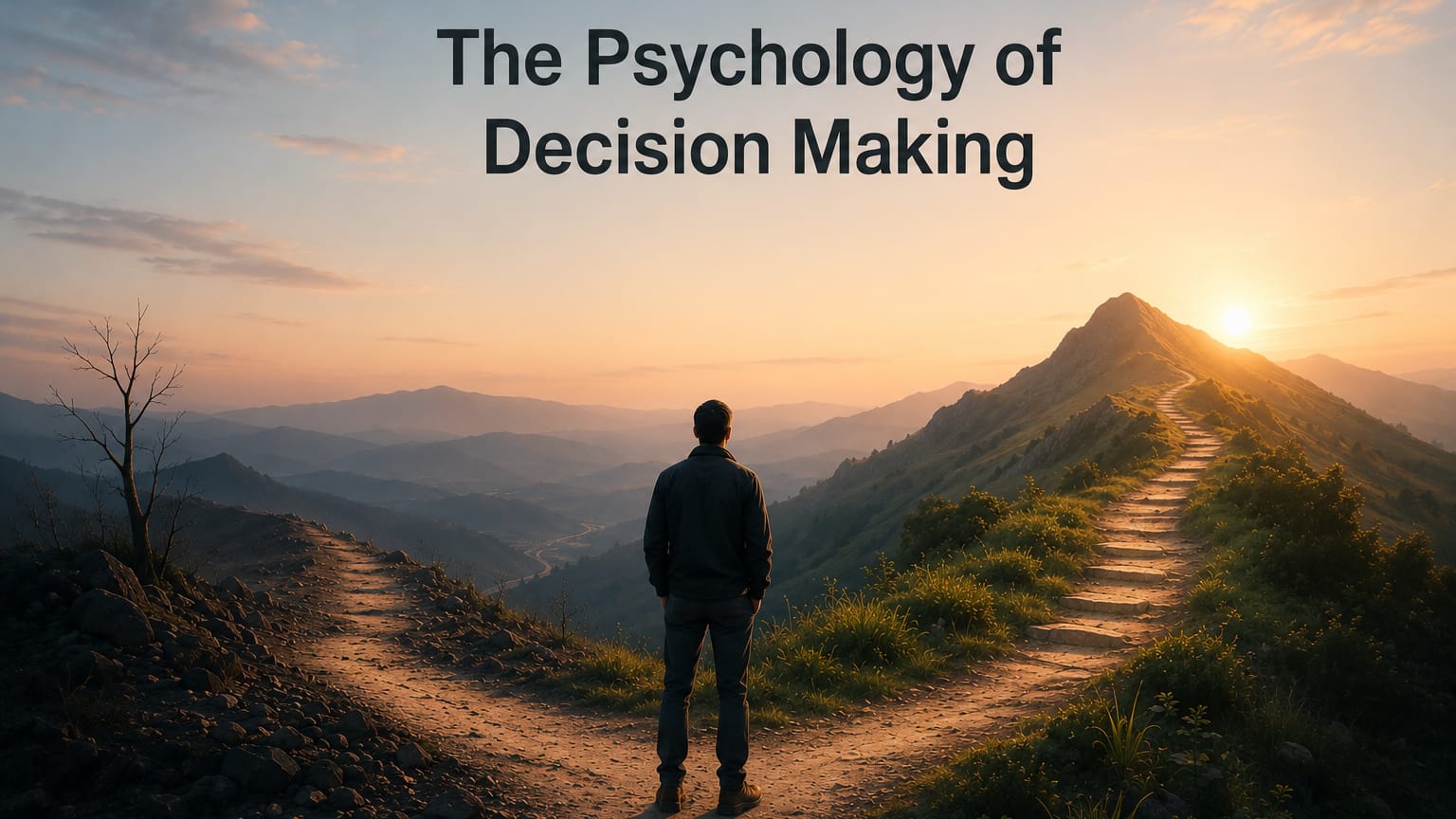
Every day, we make hundreds of decisions—some small, like what to eat, and others life-shaping, like career moves or relationships. Yet most of us rarely pause to understand how we decide. The psychology of decision making explores the mental processes behind our choices, revealing how emotions, habits, biases, and environment quietly influence outcomes.
As the saying goes,
“In every moment of decision, the best thing you can do is the right thing, the next best thing is the wrong thing, and the worst thing is nothing.” — Theodore Roosevelt
Understanding decision psychology isn’t about becoming perfect—it’s about becoming aware. Awareness helps us shift from impulsive reactions to intentional actions.
Why Smarter Decision Making Is Essential
Smarter choices lead to better health, stronger relationships, financial stability, and personal growth. Poor decisions, on the other hand, often stem from stress, overthinking, or emotional shortcuts—and they compound over time.
In today’s fast-paced world filled with information overload, our brains look for quick answers. This can lead to cognitive biases like fear-based thinking, confirmation bias, or choosing comfort over long-term benefit. Learning to make better decisions gives you control over your direction instead of letting circumstances decide for you.
“It is in your moments of decision that your destiny is shaped.”
6 Practical Ways to Make Smarter Choices
1. Pause Before You Decide
Most bad decisions happen in emotional moments. Create space between stimulus and response. Even a short pause allows your rational brain to catch up with your emotions.
Ask yourself: Am I reacting or responding?
2. Clarify Your Real Goal
Many choices feel confusing because we don’t know what we truly want. Define your outcome first. Is it peace? Growth? Security?
Clear goals simplify complex decisions.
3. Limit Your Options
Too many choices create “decision fatigue.” Narrow your options to 2–3 strong alternatives. This reduces overwhelm and increases satisfaction with your final choice.
4. Think Long-Term
Our brains naturally prioritize immediate rewards. Train yourself to consider future impact.
A helpful question: Will this matter in 6 months or 5 years?
5. Separate Feelings from Facts
Emotions provide valuable signals—but they shouldn’t run the entire show. List objective pros and cons. Look at evidence. Then integrate emotions as one part of the process, not the whole.
6. Learn from Past Decisions
Every choice leaves feedback. Reflect on what worked and what didn’t. Growth comes from patterns, not perfection.
Remember:
“Don’t be afraid to give up the good to go for the great.”
Final Thoughts
Smarter decision making isn’t about always choosing correctly—it’s about choosing consciously. When you understand your mental habits, slow down your reactions, and align decisions with your values, life becomes less about regret and more about progress.
You don’t need to control everything. You just need to control your choices. And over time, those choices quietly build the life you live.